For decades, nurse practitioners have played a critical role in expanding access to healthcare, especially in primary care, mental health, and underserved communities. As healthcare systems grow more complex and patient needs increase, the responsibility placed on nurse practitioners has never been greater. Strong clinical preparation is no longer optional - it is essential.
As a practicing Family Nurse Practitioner and Psychiatric Mental Health Nurse Practitioner, I have seen firsthand how well-prepared NPs can transform patient outcomes when education is intentional, structured, and rooted in real clinical experience. I have also witnessed the consequences when preparation is rushed, fragmented, or overly focused on nurse practitioner testing rather than comprehensive clinical learning.
Today, nurse practitioner education stands at a crossroads. Across classrooms, clinical settings, and online professional forums, the same concern repeatedly emerges: are we preparing nurse practitioners deeply enough for real-world practice, or are we prioritizing nurse practitioner board exam pass rates at the expense of true readiness?
How Nurse Practitioner Education Shifted Away From Comprehensive Learning
Nurse practitioner education was originally designed as an extension of professional nursing practice—not as an entry-level clinical shortcut. Early programs assumed that students entered graduate education with strong bedside experience, assessment skills, and clinical intuition. NP education then built upon this foundation by teaching diagnostic reasoning, disease differentiation, and evidence-based management.
The family nurse practitioner (FNP) role, in particular, was intended to be layered and deliberate. Students developed competence over time through repeated patient exposure, mentorship, and supervised decision-making.
Over time, however, several forces reshaped this model. Healthcare workforce shortages increased demand for advanced practice providers. Universities faced financial pressure to expand enrollment. Online education increased accessibility but also introduced wide variability in clinical oversight. As education became increasingly influenced by scale and efficiency, the focus gradually shifted.
Admission pathways shortened. Clinical experiences became inconsistent. Success metrics moved away from clinical readiness and toward performance on the nurse practitioner board exam.
Why Nurse Practitioner Testing Cannot Measure Clinical Readiness
The nurse practitioner board exam was designed to assess minimum competency, not mastery. It evaluates baseline knowledge and fundamental clinical reasoning to ensure patient safety. What it does not measure is confidence under pressure, comfort with uncertainty, or the ability to synthesize incomplete patient information in complex clinical scenarios.
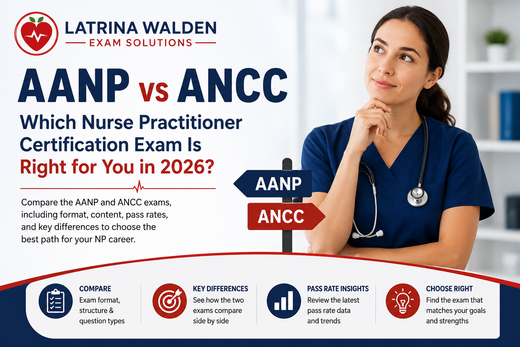
This limitation explains why many graduates who successfully pass AANP certification or ANCC nurse practitioner board exams still feel unprepared when they begin practicing independently. Comprehensive learning involves understanding disease processes before memorizing treatments, recognizing clinical patterns across populations, and confidently applying assessment findings to diagnosis.
While AANP and ANCC certification pathways are essential milestones, they cannot replace the depth gained through intentional clinical education. Testing rewards how a clinician thinks—but only when education has already built that thinking skillfully.
The Erosion of Professional Relationships and Role Clarity
The erosion of comprehensive learning has also affected professional relationships within healthcare teams. Tension between nurse practitioners and physicians is often misinterpreted as competition. In reality, it frequently stems from differences in preparedness and role clarity.
Respect grows when education reinforces collaboration, accountability, and humility alongside autonomy. When NPs are grounded in competence, confidence feels earned rather than defensive. Comprehensive learning protects professional relationships by ensuring that independence is supported by clinical skill rather than test success alone.
Faculty Awareness and Institutional Barriers
Many academic leaders and faculty members recognize these educational gaps. However, meaningful reform is often discouraged by institutional barriers. Accreditation requirements, enrollment pressures, faculty governance structures, and financial constraints make bold curricular changes difficult.
Silence, however, has consequences. When comprehensive learning erodes, students carry the burden through burnout, imposter syndrome, and self-doubt. Patients ultimately absorb the risk through inconsistent assessments, delayed diagnoses, and fragmented care.
Why Comprehensive Learning Determines Long-Term NP Confidence
Assessment is one of the most undervalued yet essential skills in NP education. From the moment a patient begins speaking, a clinician is already assessing—forming differentials, identifying red flags, and prioritizing risks. Without strong assessment skills, diagnoses become reactive, labs are ordered reflexively, and treatment decisions feel uncertain.
Historically, RN experience helped develop this foundation through pattern recognition, patient communication, and clinical intuition. As more students enter family nurse practitioner certification programs with limited bedside experience, educational programs must teach foundational assessment and advanced diagnostic reasoning simultaneously.
This structural challenge makes comprehensive learning harder to achieve within compressed timelines and contributes to the anxiety many new nurse practitioners experience after graduation.
Rethinking Exam Preparation: Beyond Shortcuts
Exam preparation remains necessary, but it must evolve. Too much NP exam preparation focuses on shortcuts, memorization, and test-taking tricks rather than clinical synthesis. Effective preparation strengthens comprehensive learning by teaching students how to think clinically, not just how to select correct answers.
Students preparing for nurse practitioner testing benefit most from structured resources that align exam content with real-world clinical reasoning. High-quality NP exam preparation courses emphasize assessment-driven diagnosis, disease processes, and clinical prioritization—skills essential for both board success and safe practice.
Bridging the Gap Between Boards and Bedside Practice
This philosophy is the foundation of Latrina Walden Exam Solutions, a learning platform developed by a practicing Family Nurse Practitioner and Psychiatric Mental Health Nurse Practitioner. Unlike traditional test prep, the program prioritizes clinical reasoning for nurse practitioners, assessment-based diagnosis, and real-world application.
Students preparing for psychiatric mental health nurse practitioner exam preparation or FNP exam preparation learn to connect symptoms with underlying pathophysiology, refine differentials, and approach patients holistically. The goal is not only to pass exams—but to practice safely, confidently, and competently.
The Future of Nurse Practitioner Education
The future of nurse practitioner education depends on honest conversations about readiness, faculty willing to lead change, and learning models that prioritize depth over speed. Healthcare is growing more complex, patients are sicker, and surface-level preparation is no longer enough.
New graduates often report that passing the nurse practitioner board exam does not automatically translate into confidence at the bedside. Learning models that emphasize clinical readiness for nurse practitioners reduce burnout, improve decision-making, and support smoother transitions into independent practice.
For those preparing for family nurse practitioner certification, AANP certification, or ANCC board exams, the question is no longer simply whether you can pass—but whether you are being prepared to practice well.
Passing boards is the beginning. Comprehensive learning is what sustains a nurse practitioner’s confidence, competence, and career longevity.